

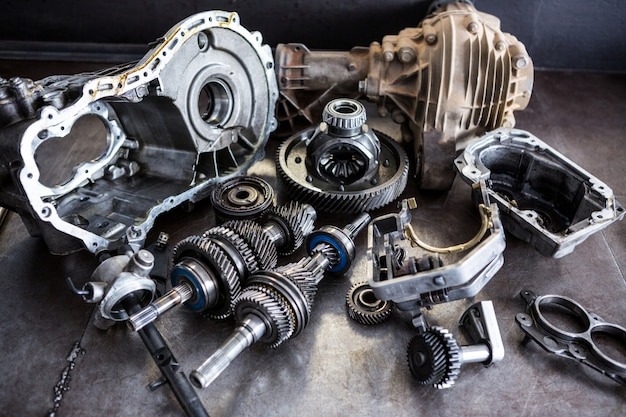
Powerstroke diesel engines are known for their use in heavy-duty trucks and work vehicles that require dependable performance, strong towing capability, and long-term durability. Like any engine, a Powerstroke system depends on many individual components working together efficiently. Understanding Powerstroke diesel engine parts can help vehicle owners identify important components, recognize maintenance needs, and make more informed decisions when replacing worn or damaged parts.
1. Understand the Engine Block
The engine block forms the main structure of the engine and houses important internal components. It contains cylinders, passages for coolant and oil, and mounting points for various components.
Because the block supports many moving parts, its condition is essential to overall engine performance. Damage or excessive wear may require professional inspection before replacement decisions are made.
2. Learn About Pistons and Connecting Rods
Pistons move inside the engine cylinders and play a central role in converting combustion pressure into mechanical movement. Connecting rods transfer the pistons’ movement to the crankshaft.
Powerstroke diesel engine parts such as pistons, rings, and connecting rods must be properly matched to the engine configuration and maintained according to manufacturer specifications.
3. Know the Role of the Crankshaft
The crankshaft converts the up-and-down movement of the pistons into rotational motion that can ultimately be transferred through the drivetrain. It is a critical component because it operates under substantial mechanical forces.
Bearings, seals, and related components should also be inspected when there are signs of unusual vibration, noise, or internal engine wear.
4. Understand the Cylinder Head and Valvetrain
The cylinder head contains important components involved in controlling the intake and exhaust processes. Valves, springs, rocker components, and other parts work together to regulate airflow through the cylinders.
Problems in the cylinder head or valvetrain can affect engine performance, fuel efficiency, starting, and overall drivability.
5. Consider the Fuel System
Diesel engines depend on a properly functioning fuel system to deliver the appropriate amount of fuel under the required conditions. Depending on the specific Powerstroke generation, the system may include fuel pumps, injectors, filters, rails, and other components.
Powerstroke diesel engine parts should always be selected according to the exact engine model and year because designs and specifications can differ between generations.
6. Learn About the Turbocharger
Many Powerstroke diesel engines use turbocharging to increase airflow and support engine performance.
The turbocharger includes components such as a compressor, turbine, shaft, and related housing. Issues such as excessive smoke, unusual whistling, reduced power, or abnormal oil consumption may indicate a problem that requires professional diagnosis.
Final Thoughts
Understanding Powerstroke diesel engine parts makes it easier for truck owners to recognize the major systems responsible for engine performance and reliability. Components such as the engine block, pistons, crankshaft, cylinder head, fuel system, turbocharger, cooling system, and lubrication system all play important roles. When replacing parts, always verify compatibility with the exact Powerstroke engine configuration and follow appropriate installation and maintenance procedures. Professional advice can also be valuable when diagnosing complex engine problems or selecting critical replacement components.






Leave a Reply